


What is OTIF and Why It Matters in Supply Chain Performance
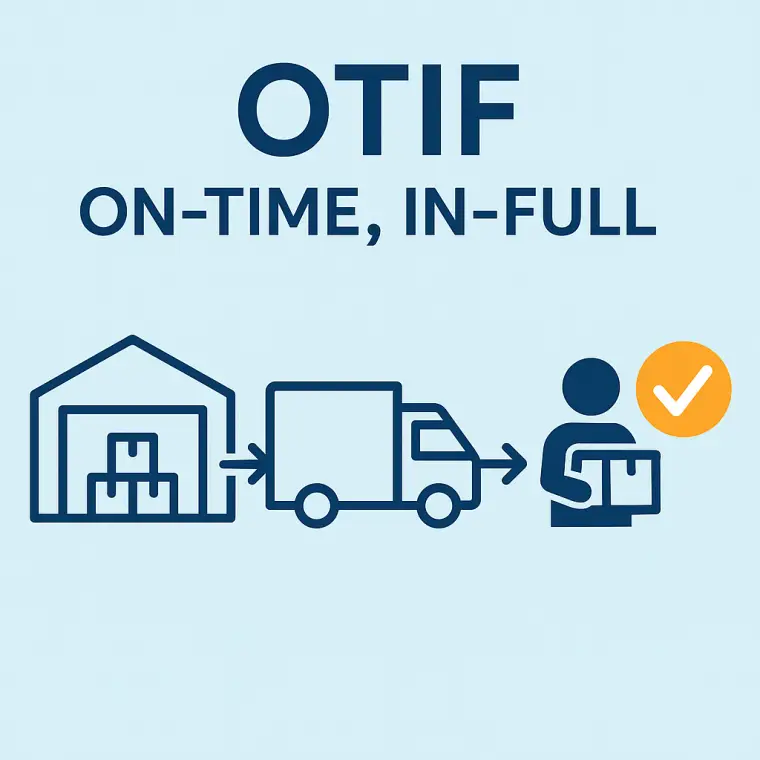
OTIF stands for On-Time, In-Full a key performance indicator used to evaluate how effectively a business meets customer delivery expectations. It measures whether orders are delivered exactly as promised, both in terms of timing and quantity, without any discrepancies. In today’s competitive supply chain environment, maintaining a high OTIF score is essential for building trust and ensuring consistent service quality.
Breaking it down, On-Time refers to delivering orders on or before the committed delivery date agreed upon with the customer. Any delay, even by a day, can impact the customer’s operations and perception of reliability. In-Full means that the delivered shipment matches the customer’s purchase order in quantity and completeness—no missing items, partial shipments, or over-deliveries.
OTIF is calculated using the formula:
OTIF (%) = (Number of orders delivered on-time and in-full ÷ Total number of orders) × 100
This metric provides a clear snapshot of fulfillment performance and helps organizations identify gaps in their supply chain processes.
The importance of OTIF goes beyond simple delivery tracking. It reflects the efficiency and coordination of the entire supply chain—from demand planning and inventory management to production, warehousing, and logistics. A strong OTIF score directly contributes to higher customer satisfaction, improved retention, and stronger business relationships. On the other hand, poor OTIF performance can signal underlying issues such as inaccurate forecasting, stock shortages, or transportation delays.
Improving OTIF requires a holistic approach. Businesses can start by enhancing inventory visibility through real-time tracking systems, allowing better control over stock levels. Investing in accurate demand forecasting helps prevent both overstocking and stockouts. Optimizing production schedules ensures timely availability of goods, while strengthening logistics coordination improves delivery reliability.
Ultimately, OTIF is more than just a metric it’s a reflection of how well an organization aligns its operations to meet customer expectations. Companies that prioritize OTIF are better positioned to achieve operational excellence and maintain a competitive edge in the market.